Where to Build the Puja Room in Your Home as per Vastu: A Simple Guide to Direction and Placement
Finding a new home is a big joy in itself, but as soon as the boxes start getting unpacked, one question comes to mind first: where should the place of worship be set up? Many families make do with a small cupboard in the living room or kitchen corner, but when a calm, sacred spot in the right direction is found for puja, the mind naturally begins to settle into daily worship. This article aims to simplify that confusion. Here you will find, together, practical rules for the direction of the puja room under Vastu, the height calculation, a solution for limited space in a flat, and how to choose an auspicious day using the Panchang.
Why Does the Direction of the Puja Room Matter?
Vastu Shastra holds that every direction has its own nature and flow of energy. The sun rises in the east, so this direction is regarded as the direction of light, knowledge and new beginnings. The north direction is linked with Kubera and wealth. The Ishan corner, that is the north-east, is considered the most sacred corner, because auspicious energy is said to enter the home from there. For this reason, it is often advised to place the puja space on this side.
It is worth remembering that Vastu should be seen not as a rigid rule, but as a guide to convenience and peace. If the floor plan does not fit the ideal perfectly, you can still hold on to the core principles and choose the best available option.
Which Direction and Corner Are Most Auspicious for the Puja Room?
If your question is simply which direction the puja room should face, the most recommended directions are these:
- Ishan corner (north-east): The best. When worshipping here, facing east or north is even better.
- East-facing wall: If the Ishan corner is not possible, place the space towards the east.
- North direction: Associated with wealth and prosperity, so this is also a good option.
Avoid these: do not set up the puja space in the south-west (Nairutya) corner, and do not place the temple directly behind a bedroom wall or against a toilet wall. Worshipping while facing south is also generally avoided.
What if the Ishan Corner Is Not Available?
In a flat, the Ishan corner is often not directly available. In such cases, look at the floor plan from the east-north side. The part of the balcony that opens to the east or north, or the north-east wall of the living room, can become good options. Make sure that there is no toilet directly above the temple, no staircase underside, and no heavy beam overhead.
How to Choose the Height and Location of the Puja Room?
Height is just as important as direction. The temple should be high enough for family members to have darshan comfortably, but not so high that it goes above the head. General guidance is as follows:
- The lower part of the temple should be about 2.5 to 3 feet above the ground, so that sitting down to worship is comfortable.
- Keep the overall height of the temple between roughly 5 and 6 feet, with the idols around eye level.
- There should be no heavy furniture or water tank directly above the top of the temple.
Check This Checklist When Choosing the Location
- Is the spot towards the Ishan or east/north side?
- Are there no toilets, dustbins or shoe racks nearby?
- Does adequate light and air come into this area?
- Is there room to sit during worship without feeling cramped?
- Is the temple free from direct collision with a door or heavy movement traffic?
If four or five of these points are satisfied, the location is good.
Where Should the Puja Room Be Placed in a Flat When Space Is Limited?
Unlike large houses, flats often do not have a separate room, so it is important to maintain reverence and peace even in a small space. Some practical solutions:
- Niche or shelf in the wall: Fix a separate shelf on the north or east wall and cover it with a clean cloth.
- Closable cupboard: Keep the temple in a small wooden cupboard with doors, so you can shut them after worship.
- Use of a corner: Place a small platform or stool in the north-east corner and decorate the temple on top of it.
In a small space, remember one principle: cleanliness and tidiness have an effect even greater than direction. Keep shoes, dust or scattered items away from the temple.
How to Choose an Auspicious Day from the Panchang for Installing a Puja Room?
In the Vedic tradition, it is customary to consult the Panchang before starting any new work. The Panchang has five limbs: Tithi, Vaar, Nakshatra, Yoga and Karana. For installing a puja room or consecrating an idol, the following are generally considered:
- Vaar: Monday, Wednesday, Thursday and Friday are regarded as auspicious. Tuesday and Saturday are generally avoided for new construction or consecration.
- Nakshatra: Nakshatras such as Rohini, Uttara Phalguni, Anuradha, Uttara Ashadha, Shravana and Revati are considered stable and beneficial.
- Tithi: Dwitiya, Tritiya, Panchami, Saptami, Dashami and Ekadashi are generally considered auspicious. Rikta Tithis (Chaturthi, Navami, Chaturdashi) are usually avoided.
- Position of the Moon: If the Moon is in a favourable house according to your birth sign, the muhurta is considered even better.
In the Indian context, people also choose days such as Akshaya Tritiya, Gudi Padwa, Dhanteras before Diwali, or the Ashtami of Navratri for installing a puja room. However, be sure to check the Panchang to determine which Nakshatra and Yoga fall on the chosen festival day.
When Should You Seek Advice Based on Your Kundli?
If someone in the family is going through a difficult planetary period, or if you feel the timing of the new installation is especially significant, it is appropriate to ask an experienced astrologer for the auspicious muhurta according to your kundli. Many people take extra care before major changes during Shani or Rahu periods.
What Steps Should Be Taken Before Installing the Puja Room?
Once the place and day are fixed, follow this sequence:
- Clean the space thoroughly and sprinkle Gangajal or clean water.
- Before getting the wooden or stone temple structure installed, double-check its measurements and direction.
- Purify the idols and pictures with Panchamrit or Gangajal before placing them.
- Decide on places for lamps, bells and incense, so that smoke does not stain the walls.
- On the day of installation, take a simple vow and perform a short aarti with the family.
Common Mistakes Related to Puja Room Vastu Direction
- Building the temple under a staircase, which creates the impression that the weight above falls on the temple.
- Crowding idols so close together that they look cluttered.
- Leaving a lamp or incense stick burning after worship.
- Keeping a broken or damaged idol where it is. Such an idol should be immersed following the proper procedure.
Conclusion
The true purpose of puja room Vastu direction is to create a corner where the mind is calm and the daily lamp is lit with devotion. If you keep together a location in the Ishan or east direction, appropriate height, a clean and tidy environment, and an auspicious day chosen from the Panchang, your worship space will naturally become the centre of the home. If you wish to know the muhurta according to your birth kundli, you can begin with the free kundli section of Ramagya, and to check the auspicious times of each day, looking at today's Panchang will also be helpful.
Common Questions About Puja Room Vastu Direction
Can the Puja Room Be Built in the Bedroom?
Building a temple directly in the bedroom is generally avoided, because keeping the sleeping area calm and separate is considered better. If space forces the choice, keep the temple in a separate cupboard and close its doors before sleeping.
What Colour Should the Puja Room Be?
White, light yellow, cream or light saffron colours convey a sense of peace and purity. Avoid dark or black shades.
Is It Necessary to Have a Door for the Temple?
It is not necessary, but a cupboard-style temple with doors keeps dust and outside influence lower and makes cleaning easier.
What Is the Most Important Thing When Building a New Puja Room?
The most important thing is that the space is clean, peaceful and comfortable, so that you can worship every day without inconvenience. Direction and muhurta come after that, and it is best to strike a balance between all of them.
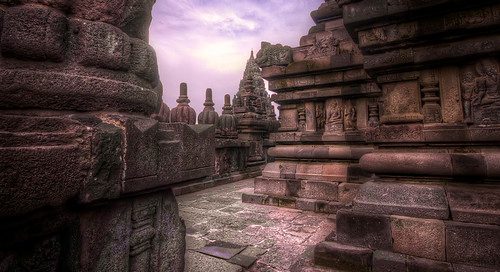
Image credit: Ancient Temple Passage — Jimmy McIntyre - Editor HDR One Magazine, via flickr (BY-SA 2.0), obtained from Openverse.